
Das Rheingold
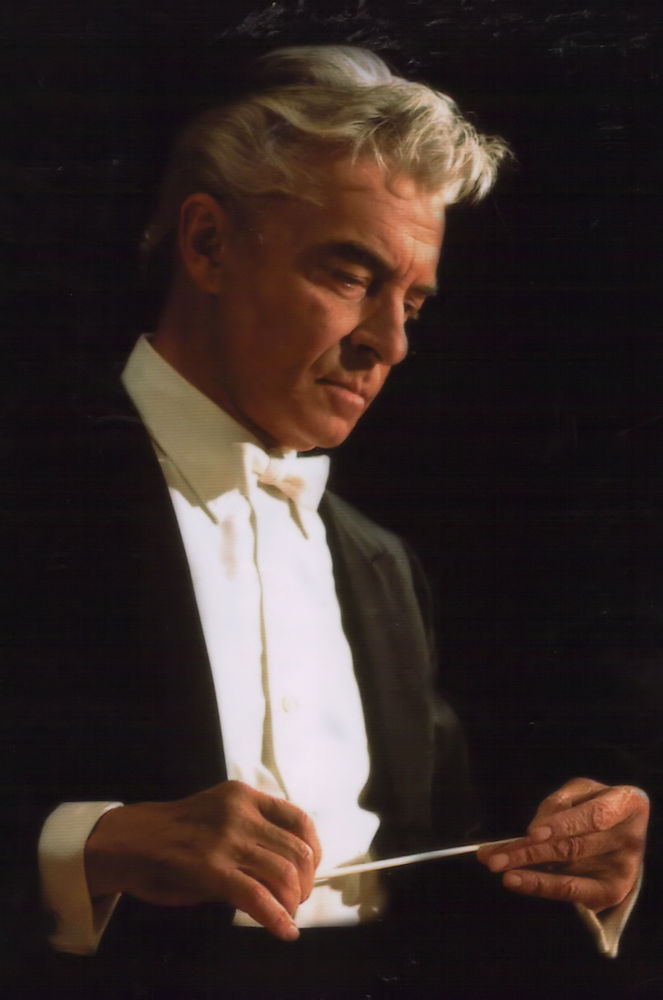
| Herbert von Karajan | |||||
| Berliner Philharmoniker | ||||||
Date/Location
Recording Type
|

| Wotan | Dietrich Fischer-Dieskau |
| Donner | Robert Kerns |
| Froh | Donald Grobe |
| Loge | Gerhard Stolze |
| Fasolt | Martti Talvela |
| Fafner | Karl Ridderbusch |
| Alberich | Zoltán Kelemen |
| Mime | Erwin Wohlfahrt |
| Fricka | Josephine Veasey |
| Freia | Simone Mangelsdorff |
| Erda | Oralia Dominguez |
| Woglinde | Helen Donath |
| Wellgunde | Edda Moser |
| Floßhilde | Anna Reynolds |


It is DG’s policy to record and release each opera of the Ring in the year of its first production by Karajan at Salzburg. We had Die Walküre in July 1967, now we have Das Rheingold and the last two operas will follow, in sequence, in the next two years.
As one would expect, Karajan interprets Rheingold in the style he adopted for Walküre – how this will suit Siegfried and Götterdämmerung remains to be seen. An essay, by Wolfram Schwinger, in the booklet labels it ‘Lyrical Cosmos’, referring to the fact that the conductor’s ‘present-day approach to the Ring music has been influenced to some extent by his work in the sphere of Italian opera, Verdi in particular…Despite his pleasure in the powerful unfolding of sound…this music to him is more in the nature of a lyrical cosmos’. The writer lists the virtues of the Karajan style as radiant clarity, virtuosity of sound, highly effective contrasts, cantabile quality, and noble vocal and instrumental beauty. However, with all respect to the writer, most of these virtues are present, if in some cases intermittently, in the interpretations of other leading Wagner conductors, such as Böhm and Solti: but what does especially stand out is the care Karajan takes to be always most considerate to his singers, and this he assuredly is.
To secure ‘vocal and instrumental beauty’, and the rest, needs commensurate forces and Karajan has these, of course, in the magnificent Berlin Philharmonic Orchestra and in his admirable cast of singers.
The 1959 Decca recording of Rheingold has been re-cut so as to match the levels of the later Ring recordings and the general effect is certainly brighter, though the ‘ground tone’ at the start of the Prelude, provided by eight double-basses, is now rather too prominent. DG’s voices, as so often, tend to be too forward, at the expense of the orchestra; but otherwise in this recording the balance is usually good and in this Prelude the ‘ground tone’ sounds at just the right volume.
The ‘effects’ used in John Culshaw’s production of the opera, and then an exciting novelty, were for the most part those indicated by Wagner and some of them are used by DG. Donner’s hammer gives the same high-clink as in the Decca. That Wagner expected a bass sound is clearly indicated in the score. There is an amusing difference between the Nibelungs shrieks – Decca uses trebles, DG tenors. I think the trebles are more effective in suggesting a bunch of small eunuchs. Both recordings fail to devise a way of making Erda sound really supernatural. She rises out of the earth in a bluish light and one wishes it could have been suggested in the recording – but perhaps for that we must await the audio-visual disc. Jean Madeira and Oralia Dominguez sing the warning solemnly enough but without any sense of mystery. Still, these are all small matters.
Both Wotans are young but that is all they have in common. George London (Decca) has a true bass-baritone, Fischer-Dieskau (DG) a light baritone. London cannot match Fischer-Dieskau’s feeling for words, for the musical phrase, but in the scene with the giants one does feel that the DG Wotan is a bantam among heavyweights. Both artists have great dignity and suggest a god-like origin. A good example of Fischer-Dieskau’s failure to fill out a great phrase with ample tone comes when Wotan stands enraptured at the sight of his glittering castle and ends his praise of it with ‘sublime, lordly structure’, set to a phrase which involves a leap up to a high F. Fischer-Dieskau sounds too effortful here. London gives the phrase its due volume. These instances are rare and with Karajan’s sympathetic treatment of the artist we can fully appreciate his truly distinguished performance.
Gerhard Stolze (DG) gives what seems to me a superlative account of Loge which, as a characterisation, leaves Svanholm (Decca) at the starting post. Here is all the malice and guile, the contempt for the other gods, that inhabit this mercurial creature. Foreseeing the ruin that will come to Valhalla he intends to survive. As Martin Cooper says in the DG booklet, he is ‘the only clear-headed and rational being in all the dramatis personnae of the Ring, the rest of whom are the slaves of their passions, their ambitions or emotions’. Stolze uses an extraordinary variety of tone from a mere whisper – sometimes almost inaudible – to the denunciatory, and manages the lyrical phrases given to him very well. This is a virtuoso performance.
To say that Zoltan Kelemen’s Alberich (DG) can stand up to Neidlinger’s (Decca) is to give him the highest possible praise. Neidlinger was persuaded by Culshaw to sing Alberich for the last time in the Decca recording. He thought it ruinous to a voice in its prime. Not all Neidlinger’s diabolical intensity is conveyed to Kelemen but his younger voice enables him to fill out the climactic moments without strain. Robert Kerns (DG) is not weighty enough for Donner and in this part I prefer Decca’s Eberhard Waechter. On the other hand Erwin Wohlfahrt’s Mime (DG) is better sung than Paul Kuen’s. No one today could equal Martti Talvela’s huge bass as Fasolt (DG) and he is vocally more in character than Walter Kreppel, whose romantic approach suggests, as AP said, a romantic young giant more interested in Freia than in the gold. Honours are equal between the Fafner’s.
Among the female singers Josephine Veasey (DG), also the Fricka of the DG Walküre, gives another excellent performance in Rheingold. There can be no basis of comparison with Flagstad’s wonderful singing of the part (Decca), for that was something unique in the annals of Wagnerian opera. Decca’s Rhinemaidens were a good team but DG’s are even better and their Wellgunde is sung by a soprano and not as in the Decca by a contralto. My Schott score lists her among the ‘high sopranos’ though the vocal range of the part is that of a mezzo-soprano, and Flosshilde that of a contralto. Edda Moser’s warm tones sound to me like those of a mezzo-soprano.
On balance I prefer Solti’s ‘ecstatic dynamism’ as Schwinger describes it in the DG booklet. I entirely agree with AP’s description of his interpretation as ‘superb, extraordinarily faithful, never eccentric, never obtrusive, lyrical without ever becoming slack or sluggish, dramatic without ever being overbearing’. Others may prefer Karajan’s more relaxed approach, the chamber-music like quality he gives to many passages, his preoccupation with tonal beauty and perhaps a more subtle gradation of dynamic levels, his revealing direction to the brass not to become aggressive when the gods enter into Valhalla. ‘Strength alone is not enough’, he says, ‘it can be played beautifully as well’. A price has to be paid for this restraint and there are some rather dull patches, as for example in the orchestral passage (the Valhalla theme) just before Wotan begins ‘Abendlich strahlt der Sonne Auge’, in the last scene, which does not glow.
But it is the old story, both are splendid interpretations that have much to offer in their own individual ways, both have magnificent orchestral playing and wonderful singing. In a word, one wants both of them. Decca’s booklet with the 1959 issue was a meagre affair compared with those which accompanied the other three operas and no doubt the reissue will be given a new one. DG’s handsome production has the libretto in German, English and French.
Alec Robertson | September 1968
The first thing to relate about the new transfer is the dramatic improvement of the sonic quality of the DG Das Rheingold. The bass levels are revealed in new splendour in such moments as the Thunderclap after Donner’s hammer blow and the transformation music between Nibelheim and the plateau approaching Valhalla, where Wagner featured the double basses quite prominently. Woodwind textures have a new clarity and depth than on the previous CD versions, which one can sample in such places as when Alberich turns himself into a frog. The superb playing of the Berlin Philharmonic is highlighted in these delicate passages as much as they are in the bolder, more extroverted sections of the score. The interlude describing the initial journey to Nibelheim reveals the ensemble of anvils with spectacular depth, making the entire transformation music into a more overwhelming experience than I can recall when listening to it on the previous CD incarnations.
In terms of the various singers’ performances, the new transfer only confirms my previous reactions to the quality of the singing. Dietrich Fischer-Dieskau’s Wotan is a satisfyingly complex portrayal, even though some may feel his voice is a bit light to surmount some of the more dramatic sections. His performance of Wotan is a deeply thought-out portrait of vacillating leadership. Many of Wotan’s lines are shaded with the feeling that one would expect from this singer’s reputation as a lieder performer. However, in spite of Fischer-Dieskau’s achievement my allegiance to Theo Adam’s splendidly flawed, realistic Wotan on Karl Böhm’s Philips Ring Cycle remains unchanged.
Josephine Veasey’s strong, linear-sounding tone gives a portrait of Fricka who sounds consistently troubled by her husband’s decisions. The interesting point of Simone Mangelsdorff’s rather shrewish sounding Freia is that she actually sounds as if she could be Veasey’s sister; surely one of the chief reasons that Karajan consistently cast Mangelsdorff in both the Salzburg and New York performance runs of Das Rheingold.
Gerhard Stolze’s vivid Loge will always be a hotly contested topic among Wagnerites. Stolze’s performance remains unforgettable as a character portrait, but one must recognize that his declaimed singing and half-sung declamation, inseparably bound together, is not to every opera-lover’s taste. I find him spell-binding and don’t miss having a more substantial tenor sound in the role. Similarly Erwin Wohlfahrt’s voice as Mime is sufficiently contrasted to Stolze’s portrayal of his brother dwarf and Wolfahrt’s years of experience make his brief appearance in this opera one to sit-up and take notice of.
Zoltán Kéléman’s nasty sounding Alberich is one of the best reasons for hearing this recording. He encompasses every twist and turn of the character of this fascinating Nibelung. His voice is strong, steely and utterly rock-solid. While he is not quite as overwhelming as Gustav Neidlinger is on the Solti and Böhm cycles, he is certainly worthy to sit alongside his earlier colleague. One example of the excellence of his portrayal is the hushed, self-discovered irony he brings to the important phrase of “Bin ich nun frei? Wirklich frei?”, after Loge releases Alberich from his bondage. At this moment, most other singers (for example the superb Ekkehard Wlaschiha on Levine’s Ring Cycle) have a tendency to overload the irony much more forcefully, as they would need to do in a large opera house. On this recording, Kéléman’s subtlety is much more thought-provoking.
Martti Talvela becomes a convincingly besotted Fasolt, his tone and timbre both pure and of sufficient beauty to make one wonder why Freia wouldn’t love him in return. Karl Ridderbusch’s Fafner displays authority, with just enough menace in his powerful tone to hint at the tragedy to come. Both Donald Grobe and Robert Kerns give convincing performances of the lesser God’s, although Kerns has a slight bleat in his voice which the microphones tend to amplify.
There is a superbly musical trio of Rhinemaiden’s, although the Presto site mistakenly misidentifies Woglinde as Liselotte Rebmann when it is clearly sung by the entrancingly youthful voice of Helen Donath, in one of her earliest commercial recordings. (Rebmann sang Woglinde in Karajan’s Götterdämmerung recording of 1969). Oralia Domínguez is a beautifully controlled Erda. She manages to sound suitably remote and detached from the other characters without the excess of audio trickery that often makes poor Erda sound like she is singing from inside a Turkish bath-house on other sets.
Von Karajan’s reading of this score is superbly controlled, with much attention given to highlighting the sonic beauty of Wagner’s orchestral lines. The larger moments come off extremely well and can still overwhelm the listener after the passing of time. Solti’s pacing of the score on Decca is still utterly magnificent; its chief majesty is the superhuman tension that Solti retained throughout his entire Ring Cycle. One comes away from experiencing Solti’s Das Rheingold feeling quite drained. I have always felt that a similar level of tension is unachievable in any live performance of the opera, as Solti indeed showed the world when he finally conducted the work at Bayreuth in 1983. Herbert von Karajan’s quest for beauty in this score is more achievable in a live performance, as the live broadcast recordings of his Salzburg and Metropolitan performances of 1967 give witness to. Karajan also manages to keep up a more sustainable level of tension throughout this unforgettable score.
The Berlin Philharmonic offer unstintingly refined playing for their permanent conductor. It must have been quite something to see them all crammed into the Berlin Church in which this Ring Cycle was recorded. One wonders how they did not overwhelm the acoustic of this often-used recording venue, as the Berlin Philharmonie was only recently built and would have easily been available to them. Ultimately, the sound engineers provide a warmly intimate sound stage, which is revealed even more clearly in the new transfer. It is worth noting that Decca’s Vienna soundstage remains the wider and more expansive of the two. If one already owns this DG Das Rheingold in any of its previous CD incarnations, the new high resolution transfer is of sufficient value for one to consider purchasing a download of these files, or streaming them via the Presto streaming service. I am as yet unaware if other streaming services can offer this in the same resolution as Presto does.
Mike Parr | October 13, 2024

 (8/10)
 | DG |
 | DG |
2.6 Mbit/s VBR, 96.0 kHz, 2.7 GiB (flac24-96)