
Siegfried
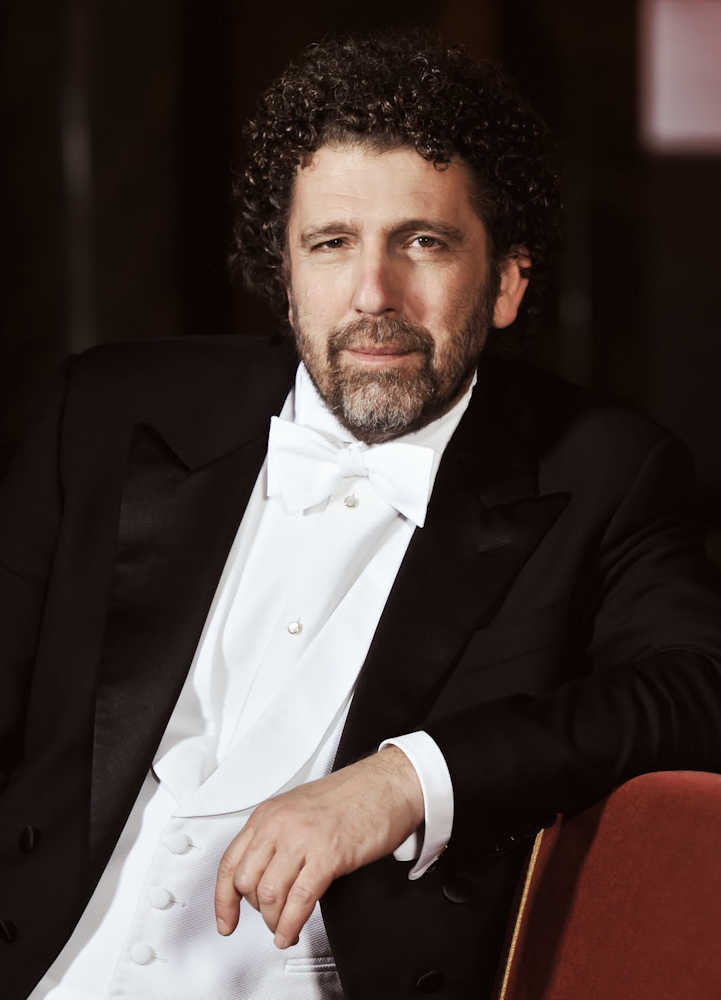
| Asher Fisch | |||||
| Orchestra of the Seattle Opera | ||||||
Date/Location
Recording Type
|

| Siegfried | Stefan Vinke |
| Mime | Dennis Petersen |
| Wotan | Greer Grimsley |
| Alberich | Richard Paul Fink | Fafner | Daniel Sumegi |
| Erda | Lucille Beer |
| Brünnhilde | Alwyn Mellor |
| Waldvogel | Jennifer Zetlan |


Siegfried is funny and touching at Seattle Opera
Seattle Opera’s Siegfried takes place in familiar territory. Mime lives in the part of the forest where the gods roamed in Das Rheingold, and the dragon has made its lair where Hunding and Siegmund fought in Die Walküre (there’s even a bloodstain on the rock, which the Wanderer touches regretfully). Also familiar from earlier in the cycle are the extraordinarily high quality of the entire production and the enthusiasm with which it was received.
Stefan Vinke’s Siegfried burst with energy as he bounded around the stage, threatened Mime, wildly swung his sword, and made friends with the local wildlife. His voice was inconsistent, with some glorious top notes in the final act and an excellent forging song, but an over-rounded quality that made his words mushed and also interfered with the purity of his tone. However, he made up for any vocal deficiencies with his stage presence and comedic antics. This Siegfried provoked laughter many times: at his attempts to play a reed to imitate the forest bird (and his ad-libbed chatter after each failure); at his efforts to speak to the dragon through its tail; at the face he made when the Wanderer’s hand touched his shoulder in Act III; and, of course at his “Das ist kein Mann!”, which was accompanied by a terrified expression and an improbably large leap backwards.
This Siegfried also had a more complicated relationship with Mime than usual. Mime’s claims to love Siegfried and his pleas for affection seemed genuine; only the corrupting lure of the ring made him plot to take Siegfried’s life. Siegfried, in turn, had a moment of regret after stabbing his foster-father, cradling his body as he died. Dennis Petersen was a vocally expressive Mime, who maintained a great sound throughout while acting well with both his voice and body. His riddle-trading with the Wanderer in Act I and his unintentional confession of his intentions towards Siegfried in Act II were especially impressive.
As the Wanderer, Greer Grimsley continued his run of solid performances. He seemed more comfortable now that he had accepted the gods’ end, and he smiled more than in both of the previous operas combined. (He seemed to really enjoy his one-sided contest with Mime.) In the final act, his affection for Siegfried – and the pain he felt when Siegfried disregarded him – came through clearly and affectingly.
Erda and Alberich appear only briefly in Siegfried, but Lucille Beer and Richard Paul Fink shone in their small roles. Ms Beer has a large, well-balanced contralto that is especially shimmering in the middle and top of her range. (Her lowest notes sometimes got lost in the orchestral music.) Her Erda – who emerged from a sheer cliff face at the Wanderer’s call – was appropriately spirit-like in her facial expressions and gestures, but at the same time recognizably human in her motherly reaction to the Wanderer’s treatment of Brünnhilde. Mr Fink’s Alberich crept along the rocks surrounding Fafner’s lair with impressive agility reminiscent of the other Ring’s Gollum. Vocally, he confirmed the good opinion I had formed on Sunday evening at Das Rheingold, with a speech-song quality to his sound that was dramatically very effective.
An unexpected announcement before the third act informed the audience that the scheduled Brünnhilde, Alwyn Mellor, was suffering from an allergy attack and that Lori Phillips would take her place. It was easy to hear from her first cry of “Heil dir” that Ms Phillips has a radiant, ringing dramatic soprano voice. She seemed to get a little lost acting-wise during her changes of heart in Act III, and she did not mesh perfectly (vocally or dramatically) with Mr Vinke’s Siegfried, but it was still a great pleasure to hear her sing.
Conductor Asher Fisch and the Seattle Opera Orchestra struggled more during Siegfried than they had in the previous two installments of the cycle. A glaring horn misstep during an Act II solo made for some unpleasant listening. There were also moments in Act I where the music seemed to be moving a hair fast for the singers or vice versa, and the love duet in Act III dragged. These minor pacing slip-ups notwithstanding, the layering and dynamics of the orchestra were flawless.
On the whole, Seattle Opera continued this week’s streak of performances that combine good singing and acting with sensitive staging and visually stunning sets. Siegfried is admittedly my least favorite opera of the Ring cycle, but the energy and skill displayed in Seattle Opera’s production made it an engaging experience.
Ilana Walder-Biesanz | 09 August 2013
This Siegfried is a superstar
When Seattle Opera general director Speight Jenkins stepped on to the stage just before the last act of “Siegfried,” the grateful audience erupted in applause. How nice! He came out for a curtain call! In their enthusiasm the listeners had forgotten that almost the only reason a general director takes the stage is to deliver bad news: In this case, the cancellation of Alwyn Mellor (as Brünnhilde), who had awakened with an allergy attack that morning and could not sing. (Jenkins later said he had waited until the last act of “Siegfried,” the only act in which Brünnhilde sings, for the announcement so that the audience wouldn’t be thinking about the cast change during the two preceding acts.)
As it happened, the replacement singer was Lori Phillips, a company regular who opened last season in the title role of “Turandot,” and allowing for a few minor timing uncertainties, she did an excellent job of both singing and acting on Wednesday evening. Her voice is powerful and resonant, her stage presence unaffected and convincing.
The big news of the evening, however, was the Seattle debut of German tenor Stefan Vinke in the title role. Huge of voice, unflagging of stamina, imaginative and energetic on the stage: this was the finest Siegfried Seattle has ever presented, in a company that has included such greats as Herbert Becker and Alberto Remedios. The tireless Vinke bounded around the stage, leaping off rocks and dashing hither and thither, just like the feisty adolescent Siegfried is supposed to be.
From the Forging Scene to the final passionate duet with Brünnhilde, Vinke poured out huge volumes of heldentenor sound capped by a mighty high C. Surely, we all thought, by Act III he’d have to be carried out on a stretcher — but no, Vinke was as resonant and active as ever.
Stephen Wadsworth’s staging continues to add refinements and complexities to the production. We see Siegfried’s ambivalence about his distasteful surrogate “father,” Mime (the excellent Dennis Petersen), cradling Mime in his arms even after he has killed him. We observe characters reacting to the music in the orchestra — turning around suddenly at a declamatory chord, responding to a change in the mood of the music, alert to a theme or motif in the score. Villains and heroes alike display more humanity: no one is all good or completely evil.
For all its seriousness, this “Siegfried” was often hilariously funny — never more so than in the scene in which greedy Mime and Alberich (Richard Paul Fink), gibbering with rage, hop up and down while throwing rocks at each other.
Greer Grimsley added more refinements to his portrayal of Wotan (in this opera he is called the Wanderer), completing a three-opera character arc that took him from an impetuous prime to a resolute old age. Lucille Beer was a good Erda, though she did not eclipse memories of other great Erdas past. Jennifer Zetlan was an excellent Forest Bird; Daniel Sumegi a sonorous Fafner.
The orchestra again responded with unusual dramatic brilliance to Asher Fisch’s conducting of the score many believe is the most beautiful of all four “Ring” operas. Unlike all the cast members, the orchestra plays every minute of every opera and all three cycles. Now that’s stamina at a positively Wagnerian level.
Melinda Bargreen | August 8, 2013

 (6/10)
 | Avie |