
Die Walküre
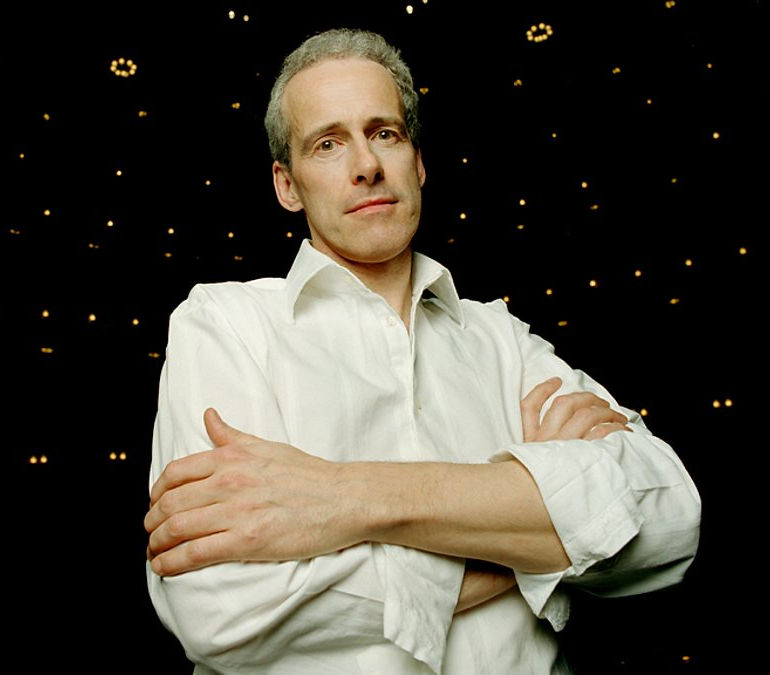
| Paul Daniel | |||||
| English National Opera Orchestra | ||||||
Date/Location
Recording Type
|

| Siegmund | Pär Lindskog |
| Hunding | Clive Bayley |
| Wotan | Robert Hayward |
| Sieglinde | Orla Boylan |
| Brünnhilde | Kathleen Broderick |
| Fricka | Susan Parry |
| Helmwige | Julia Melinek |
| Gerhilde | Giselle Allen |
| Ortlinde | Claire Weston |
| Waltraute | Emma Selway |
| Siegrune | Rebecca dePont Davies |
| Grimgerde | Valerie Reid |
| Schwertleite | Ethna Robinson |
| Roßweiße | Leah Marian Jones |


My latest appointment with the second chapter of Wagner’s Ring cycle was approached apprehension. The recent experience of director Phylida Lloyd’s interpretation of The Rhinegold for English National Opera had raised serious misgivings about her staging of one of the grandest music dramas of them all.
In the event, I’m bound to report The Valkyrie, while still seeking, at least in early scenes, to maintain the strange, modernistic form which in The Rheingold appeared so alienated from the great, timeless score, began to engage with the music.
Could it be my own senses were at last absorbing the director’s language? Or is the opera itself proving too powerful for her confinement? What, in the first part, had appeared musical and dramatic performances of different genres is now beginning to look occasionally at least, homogeneous. Black-jerkined Valkyries still lack the mystique of Wagner’s witches and men in white coats say more about Phyllida Lloyd’s encounter with Tennessee Williams than they do about Wotan’s incestuous longings.
Not that such public argument between director and subject is to be encouraged. It’s hard enough for the new audiences ENO would draw to the Coliseum to come to Wagner at the best of times, let alone to struggle with a performance at odds with itself. If Wagner’s Ring is to work its magic for the average mortal, it needs the impressive brilliance from the pit to be reflected by the figures on stage, human or divine.
A piercing scream raises the curtain on Hunding’s lonely hut, looking remarkably like a rustic version of Richard Hudson’s design for Rheingold, as unidentified figures move in and out. Signs of an absence of motivation in the central characters will continue to flaw later scenes with text and business stretched to fill the musical background, rather than developed in response to it. A hardness of tone in Par Lindskog’s Siegmund contrast’s sharply with the rich bass of Clive Bayley’s Hunding with Orla Boylan a sweetly sung Sieglinde.
Robert Hayward’s Wotan falls distinctly short on authority in his Act II scenes with the rebellious Brunhilde – a striking performance, beautifully sung, by the slim Kathleen Broderick – and with the schoolmarmly Fricka of Susan Parry. Yet Hayward taps a richer vein of compassion for the challenge of a god’s realisation that he is also a father.
The famous Ride of the Valkyries, enacted as a surfing spectacular in the skies with the corpses of slain warriors tumbling from the heavens as their reward, almost succeeds in matching the sound that is one of the most famous on the operatic stage. As for the recreation room setting for the Act II world of the gods, use of a live camera might have been more effectively used to underscored Wotan’s sentence of banishment. It does little, however, for Brunhilde seated front stage where her atural expression is vision enough.
Isn’t the real danger of experimentation in this drama one of blurring our focus on the lyricism and intensity of relationships Wagner has so carefully conjured for us? Speculating as to what the director is up to hardly seems a fair return for a five-hour session. As Thomas Mann, in the programme notes, reminds us: it is the element of the mysterious, the nebulous and halfdiscernible which enhances the grandeur.
At least Paul Daniel and the generous orchestral forces, which might step up the tempo a touch, are not in the business of such diversion.
Kevin Catchpole | 2004
After a less than successful start to English National Opera’s new staged production of the Ring cycle, a Rhinegold which I described at the time as “dull”, “unimaginative”, “undramatic” and one which was “cast unevenly and… conducted flaccidly”, the company has redeemed both itself and the long-term future of its cycle with this outstanding new production of The Valkyrie. If not flawless, it is played, sung and staged with a degree of conviction which was conspicuously lacking in the first part.
The opera starts, not quite with Wagner’s rampant ‘cellos and basses rumbling beneath tremolo strings (one of the greatest of all opera openings), but with Sieglinde filling the vaults of the opera house with a piercing scream. It’s a startling beginning and one directorial touch among many that sets this production apart from Rhinegold. Whereas the latter concentrated on giving us an urban surrounding for our Gods that was determinedly Thatcherite in its politics of human neglect and greed, Valkyrie places our mortals in a world decimated by conflict. The upturned tree, with its sprawling roots, a gun-toting Hunding and Brünnhilde, militaristic valkyries and slain hoodlum paratroopers hint at universal conflict and unrest – although one could argue that Lloyd sees it as regionalised with her Sieglinde dressed as a Muslim imprisoned by a combat-clad Hunding. Wotan – in white-tie – and Fricka – with briefcase and power-dressing suit – recall the weaknesses of Rhinegold but in most instances the transposition of the opera to its current setting is a convincing one.
Act I, the weakest of the three in this new production, begins in Hunding’s hut – perhaps more accurately a bunker. It is simplicity itself, scantily decorated – much as Wagner suggested in his libretto – but when Sieglinde sings, “You are my spring” the back opens up onto an emerald green landscape that sends a halo of light into the auditorium. It is the only moment of lightness in a scene which is drearily depressing. Siegmund and Sieglinde consummate their love as silhouetted figures writhing passionately on a table, a phallic sword drawn from between her loins. These are not equally matched siblings, however. Pär Lindskog, as Siegmund, looks heroic but sounds anything but that. Too often his voice projects lyrical cloudiness and his pitch is almost constantly flat. His cries of “Velsa! Velsa” (here reduced to a singular “Velsa” in the new libretto – why?) fail to ignite as they should. Orla Boylan’s Sieglinde, in contrast, is stoically trenchant in her singing, a formidable bride for her brother, and capable of ecstatic lyricism in her final scene.
Lloyd’s vision reaches its apex in this production with the second act, an impressive visual experience that does much to supplant some below par singing. Robert Hayward’s Wotan – if still suffering from that monochromaticism of tone that almost wrecked Rhinegold – is here more brutish in his delivery. But firmness of tone does not a Wotan make, and throughout the act the lack of colour to the voice sometimes gives the effect of undermining Wotan’s moral authority. Sat impassively in his armchair – with a clinging Brünnhilde folding herself around him – the first suggestions of their own incest which Lloyd realises more starkly in Act III – he watches on the ‘big screen’ Hunding’s hunter-like instincts in tracking down Siegmund. ‘Filmed’ as a vast silhouette, and giant-sized at that, Siegmund’s death recalls any number of screen equivalents – from Psycho through to Tenebrae. Less convincing use of the screen is perhaps in Brünnhilde’s Todesverkündigung where much of the ominous impact of the scene is lost, splendidly though Kathleen Broderick sings it.
Act III begins with paragliding valkyries and the descending torsos of lost warriors – dirty vests and helmets all being a little too suggestive of gay cartoon iconography. Chorography is not always clean – at times one was reminded of stilted action men, but it is convincing on its own artistic level. Less convincing is perhaps the greatest scene in the opera – Wotan’s and Brünnhilde’s last act duet. In part the clinical whiteness of the hospital setting detracts from the very emotiveness of this farewell, with Brünnhilde’s sleep – by injection – reverting back to the image of the Gods’ drug-withdrawal in Rhinegold. Yet, both Broderick and Hayward reach levels of singing that only the Hunding of Clive Bayley has previously achieved. One might have wished for a greater sense of legato in Hayward’s voice but he reserves his best singing for the Farewell nevertheless. Their final embrace – and incestuous kiss – before Brünnhilde is encircled by fire (here a molten reddening of the stage amidst billowing smoke) has a momentary passion to it which eclipses that of the Walsung twins in Act I.
The singing is largely well done throughout – even if diction often goes for nothing. Orchestrally and musically, however, this is an improvement on Rhinegold. After Paul Daniel’s lumpen conducting of the prelude to the Ring his pacing of Valkyrie is exemplary. True, he takes a deliberate pace at the opening of the opera (hear Leonard Bernstein with the New York Philharmonic in 1968 for a simply wild opening) but it is gripping and the playing is sufficiently weighty enough. Tempi can be blistering – the opening to Act III, for example – but Daniel is also attune to the lyrical moments in the score. The climax to The Farewell is ecstatic, reaching a tidal wave of eroticism at its close. Throughout, the ENO orchestra play with superb control and tonal brilliance. As with Rhinegold, lighting is impressively done by Mark Henderson and Richard Hudson’s designs, more successful than they were for the previous instalment of this cycle, are never less than eye-catching, and often more than that.
Marc Bridle | 8th May 2004
Economy size
Phyllida Lloyd’s Rhinegold was an uncomfortable comedy of sleaze that pushed the conventional class-based view of the Ring to an extreme. Lloyd’s Valkyrie is a further exposé of the gods’ corruption and the misery it inflicts on humanity (particularly the humans the gods purport to love) and on themselves. The terms of reference are still contemporary but generic: the world is a war zone somewhere roughly today, Siegmund and Sieglinde are battered civilians, and the dead warriors wear camouflage fatigues. Fricka is still corporate, carefully groomed in suits. Wotan and the Valkyries are more elemental, spirits of war. The horror of everyday violence has its models and causes here in barely idealized gods who are human weaknesses made transcendent. Like Nicholas Lehnhoff’s Parsifal for the ENO, It is probably not Wagner, but the first performance was a powerful experience for those who did not expect something in particular.
Unlike Lehnhoff’s elegant Parsifal, however, this Valkyrie looks like the cheapest production ever at the ENO (even more than the “single set” Italian season), and makes even the Scottish Nation Opera Ring look lavish. The stage is almost bare throughout, and there is one colour created mainly by lighting in each act: green “spring”, orange as the Valkyries wrangle dead soldiers on rope and red flames (as Brünnhilde stands alone on an empty state) at the end. It has an austere grandeur and, with some committed performances, a substantial emotional punch.
The performance began with a piercing shriek, Sieglinde’s nightmare, which set a tone of heightened quasi-realism on stage. The orchestra was energetic and coherent, on top of the music rather than reveling in it, and was less visceral than most of the singers. Pär Lindskog was a passionate, youthful Siegmund, apparently doomed to burn out if Hunding didn’t get him, but his singing was edgy in a way that was not always comfortable to listen to. His English was impressively lucid if not quite native in pronunciation. Orla Boylan was a bruised Sieglinde who blossomed vocally as her passion grew. Clive Bayley was rock solid and musical as an impassive but terrifying Hunding, as focused of voice as he has ever been and perhaps a future Wotan. At least, he is probably as loud as John Tomlinson. Wotan himself was cryptic and unpleasant, both gone to seed from the anxious borderline criminal property developer of Rhinegold and become more demonic. Robert Hayward’s voice is almost beautiful, and he was a suitably sinister presence and inhuman presence throughout, melting only in his farewell to Brünnhilde, which came over as a sentimental lapse rather than a tragic moment of love and self-awareness.
The Valkyries (in black lycra and brunette wigs) were likewise inhuman, a touch butch and gung-ho in their music. They disconcertingly evoked the recent images of American women soldiers abusing Iraqi prisoners in the way they made the dead warriors into zombies and made them pose, before Wotan made them into a new military unit. Kathleen Broderick’s Brünnhilde was vocally steady but not quite exciting. Her petite frame and slightly worn face, projected on the stage during her appearance to Siegmund, suggested Lulu more than the traditional blond beastess, and the production movingly emphasized her fragility: drugged and stripped of her Valkyrie gear to her Calvin Kleins, she was horribly exposed on the stage. Wotan finally roused the fire to protect her from a horde of potential rapists in a painfully telling paternalist gesture.
HE Elsom | London Coliseum 05/11/2004
Like a film critic with a closely guarded plot twist, I have some misgivings about drawing attention to the beginning of The Valkyrie. But few readers will be unaware by now of the ear-splitting scream that opens Phyllida Lloyd’s production: the boldest gesture yet in her ongoing Ring Cycle for English National Opera. In the second opera of the cycle, Lloyd’s ideas have begun to ignite. Her use of video projection is smoother, Richard Hudson’s sets are sharper, and Mark Henderson’s lighting is breathtaking. As Siegmund (Pär Lindskog) and Sieglinde (Orla Boylan) embrace, the walls of Hunding’s hut peel back to reveal a wash of brilliant, intoxicating lime – a colour last seen on Erda’s stockings in Rhinegold. Colour is crucial throughout. Brünnhilde’s ring of fire – a vague red spot-light that intensifies and intensifies to bathe the auditorium in scarlet – is first muted then triumphant. The beginning of Act III sees a spectacular coup de théâtre as the Valkyries reel in the Fallen Heroes from a blanched skyscape, though the passivity of these iron-pumping play-things is but a brief distraction from the Valkyries’ habitual prostration. Here, as in several other places, one starts to question whether Lloyd can maintain her moral agenda without detracting from Wagner’s more ambiguous original. The enforced sedation of Brünnhilde is undeniably harrowing but appears to have been imported from another drama, while Wotan’s exit through the audience – tripping over their bags and coats – is a mistake.
Showing Brünnhilde as Wotan’s help-meet in the nightmarish opening scene – an echo of his appearance with Loge at the start of Rhinegold – establishes their relationship instantly and emphatically. Lloyd pulls no punches here and I admire her courage in drawing their incest and mutual fascination so matter-of-factly. Were it not for the minor issue of some stolen gold, she suggests, this dysfunctional father and daughter might live happily ever after: fighting, fucking, playing and scheming. But they can’t. And the trouble with having an exceptionally bad Wotan is that you need an exceptionally good performer to play him. Robert Hayward’s acting still lacks authority and fluency – making Kathleen Broderick’s quirky, kittenish Brünnhilde weirdly forceful by comparison – and his diction is woofy. (In Wotan’s Farewell, for instance, I caught “Rolling with Prodi, billing with joy, you sucked your Fiat…”, which sounds more like poésie concrète than Jeremy Sams’s translation.) For clarity and colour, the stars of this cast are in Act I: Lindskog (brilliant of tone despite intonation problems), Boylan (committed and radiant) and Clive Bayley (as a brutish, bewildered Hunding). But the orchestra are much invigorated after a woeful Rhinegold and Paul Daniel’s conducting, though rarely more than efficient, is greatly improved. A giant step forward from part one then, but as great a step again will be required for Siegfried.
Anna Picard | Sunday 16 May 2004

 (5/10)
 |
Sung in English.
A production by Phyllida Lloyd (2004)