
Das Rheingold
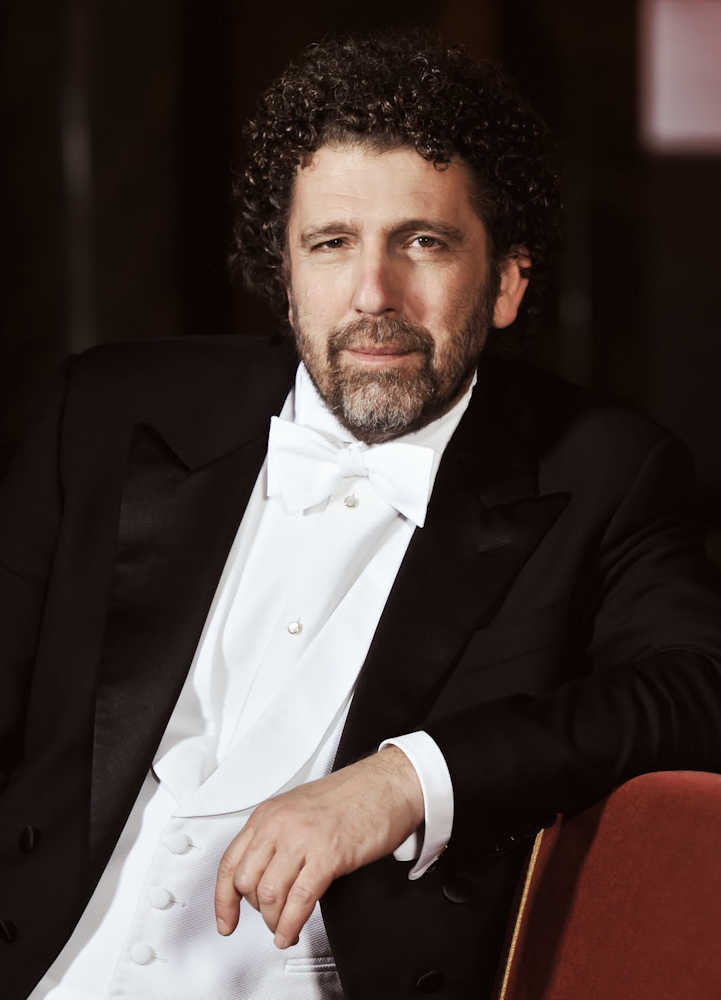
| Asher Fisch | |||||
| Orchestra of the Seattle Opera | ||||||
Date/Location
Recording Type
|

| Wotan | Greer Grimsley |
| Donner | Markus Brück |
| Froh | Ric Furman |
| Loge | Mark Schowalter |
| Fasolt | Andrea Silvestrelli |
| Fafner | Daniel Sumegi |
| Alberich | Richard Paul Fink |
| Mime | Dennis Petersen |
| Fricka | Stephanie Blythe |
| Freia | Wendy Bryn Harmer |
| Erda | Lucille Beer |
| Woglinde | Jennifer Zetlan |
| Wellgunde | Cecelia Hall |
| Floßhilde | Renée Tatum |


A Richly Rewarding, Re-imagined “Rheingold”
The year of the 200th anniversary of the birth of Richard Wagner and the 50th anniversary of the Seattle Opera was the occasion for the latest and perhaps last revival of the Stephen Wadsworth production of his four opera “Ring of the Nibelungs”.
Wadsworth’s extraordinary achievement, when considered against the rest of the world’s current “Ring” productions, is the one which most closely follows its composer’s expressed wishes.
Absent any of the metaphorical intrusions of the human technologies of later times that populate other late 20th and 21st century “Rings”, the Seattle “Ring” might be considered the pure standard of what the “Ring” was originally intended to be.
Seattle Opera’s “green Ring” creates a verdant primeval world in which gods, dwarves and giants vie for power; whose deep rivers contain treasures guarded by tail-finned women; and whose fates are observed by such beings as an Earth Mother with her daughter Norns.
All action is set in what plausibly might be the environments in which each of these beings existed.
Wadsworth, like most of the major American stage directors, eschews the “stand and sing” traditions of operatic performance, for intense studies of each line of an opera’s text.
Working with that text and his performers (one can expect every singer in a Wadsworth “Ring” to be an accomplished actor) , each character’s motivations at each point of the the drama is studied.
The text in Wagner is further illuminated by Wagner’s system of leitmotivs that provide additional evidence of a character’s motivation or emotional state at any given moment.
Re-imagining “Rheingold”
When the director and performers are engaged in a process to determine how each line of text should be acted, the life experiences of each actor (including their performances in previous productions) matter.
Thus, a cast and director’s collective insights into each character can change between the mounting of a production and a production revival if the cast members are different. Even for returning artists this will often occur, because they have had new experiences in their role or in life since the last set of performances.
“Rheingold” is an expositional opera, with abundant information on the backstories of the battles between gods, giants, and Nibelungs – their fears, their intrigues and their strategies.
I had described the 2009 Wadsworth “Rheingold” production in considerable detail.
I found the 2013 revival to be even more insightful, particularly in the second and fourth scenes, with the complex emotional interactions between the characters.
The first scene deep in the Rhine River and the third scene in Alberich’s Nibelung underworld tend to be “action” scenes. Even though a lot happens in the second and fourth scenes as well, in the latter scenes there is more opportunity for intimate relationships between characters to build.
The unexpected power of Alberich’s curse of the magical Ring begins to affect the judgment and composure of each the characters. With Wadsworth’s methodological approach to the storyline, the 2013 staging builds upon the insights from the 2009 “Rheingold”.
As an example, once Erda (Lucille Beer) has deflected Wotan (Greer Grimsley) from his inclination to defend his possession of the Ring, whatever the cost, Wotan still seems immobilized by the thought of surrendering it to save his sister-in-law Freia (Wendy Bryn Harmer).
Wotan’s wife Fricka (Stephanie Blythe) takes the Ring off of Wotan’s hand, who hands it to Freia, who then gives it to the giant Fasolt (Andrea Silvestrelli) who is in love with her.
Each of these handoffs has emotional significance.
Fasolt, who held the Ring for only seconds, becomes the first of the possessors of the Ring to die. Fafner, and characters we meet in later operas – Siegfried and Brünnhilde – will follow Fasolt into death, as a result of the curse, as will Wotan, who possessed the Ring only for a few moments longer than Fasolt.
Notes on the 2013 “Rheingold”
The technical brilliance of the scene under the Rhine River, with the three flirtatious Rhine Maidens (sung by the returning Jennifer Zetlan, and the debuting Cecilia Hall and Renee Tatum) darting like fish through the vertical spaces of the Seattle Opera stage.
Each Rhine Maiden had two unseen technicians working with her, to create the effect of swimming through water. Singing Wagnerian opera is in itself an athletic pursuit, but combining it with mid-air somersaults and other aquatic illusions is an astonishing accomplishment.
Thomas Lynch’s sets were as beautiful as ever, evoking a lush, unspoiled riparian forest from which craggy mountainous outcrops jutted.
The Nibelheim, a dark and eerie place from which veins of gold could be seen everywhere through the murky light, was the scene of the outwitting of Alberich, his self-transformation into a laugh-provoking toad creating the series of events that resulted ultimately in the end of the race of gods (some 15 performance hours later).
Conductor Asher Fisch and the Seattle Opera Orchestra
I had previously commented on Asher Fisch’s memorable musical direction of operas both Wagnerian [see Tristan Tried and True: Clifton Forbis Sells Seattle Opera’s New “Tristan und Isolde” – July 31, 2010] and Verdian [see 21st Century Verdi: Radvanovsky Leads World Class Lyric Opera “Ballo” Cast – Chicago, November 15, 2010].
I found both the conducting and orchestral playing, from the very first E-minor chord, to be alternatively luminous, lyrical and powerful, a near-perfect sound in this acoustically caressing hall for this demanding work.
The returning artists – Grimsley, Blythe, Richard Paul Fink (Alberich) and Dennis Petersen (Mime) – each sounded larger than life. These four artists are not only great contemporary interpreters of their parts, they belong on lists of the major artists of all time for each role.
Also returning, and effective, were the two giants, Andrea Silvestrelli as the amorous Fasolt, and Daniel Sumegi as the sinister Fafner.
There were five new members of the god/demi-god coterie. Mark Schowalter made a strong impression as Loge, whose association with fire was made even more vivid by myriad shooting flames, from the stage floor or from his hands, particularly when his character was annoyed in any way.
Wendy Bryn Harmer was a lusciously voiced Freia, who seems ready for the larger jugendlich Wagnerian soprano roles (such as Elsa in “Lohengrin”).
Markus Brueck (Donner), Ric Furman (Froh) and Lucille Beer (Erda) each displayed large voices and intelligent acting in the important, smaller roles.
Thoughts on the Production
“Rheingold” is only the first part of the large, intricate story. Such innovations in the staging as has been suggested by the changes in “Rheingold” will be revealed to us on the future nights.
I was struck by so many details. In the crevice that exists between the world of the gods and the Nibelheim, Mime (unexpectedly) appears, assisting the Nibelungs who carry the Rhine Gold, in and out of the crevice, then gives a defiant gesture to the gods above.
Perhaps the most interesting emotional innovation in “Rheingold” is just before its finale as all the gods, excepting the skeptical demi-god Loge, depart for their new home in Walhalla. Fricka, who remains suspicious of Wotan’s motives, first stares at the body of Fasolt, Then, she connects with Loge, who until now she has despised, but whose warnings she now begins to understand. They take each others hands momentarily before she leaves to join the others.
Recommendation
I have listed this production as one of the world’s great operatic treasures among existing productions. Since there are only two additional scheduled performances of this opera, I recommend that any opera goer that has a chance to secure one of the remaining tickets at the Seattle Opera to do so.
I have advocated in the past that there should be some long term plan to secure the future of Thomas Lynch’s sets and to preserve the stage directions and instructions for replicating the technical wizardry of the Rhine scenes (and scenes in three succeeding operas).
For those who saw the 2013 “Rheingold” performance, or will see one of the two remaining performances scheduled, congratulations! This is a wonderful experience.
William Burnett | August 5, 2013
Seattle Opera’s Ring cycle begins well with a stunning, locally inspired Rheingold
Some Ring cycles are based on ideological concepts; Seattle Opera’s current Ring cycle is based on a place. That place is the Pacific Northwest of the United States, home to such extraordinary natural beauty that stage director Stephen Wadsworth has deemed it fit for the gods. The second and fourth scenes of this Rheingold are set in a realistic forest, with trees, rocks, and a generally rained-on feel that will seem familiar to Oregon and Washington natives. Both the technical execution and the place created are stunning; I could understand Alberich’s desperate need to possess the gods’ world, especially because it contrasted starkly with Alberich’s own realm – a pitch-black mine with the occasional glimmer of gold in the walls. The transition back to the gods’ forest made the audience blink and along with the actors, as both the characters and spectators took in their surroundings and relished their escape from the darkness.
However, beautiful as the forest was, returning to it was not quite sufficient compensation for being forced to move on from Scene 3, in which Richard Paul Fink stole the show as Alberich in the mines. With his commanding stage presence and gestures accentuated by cracks of a whip, he coughed, grunted, lip-trilled, writhed, and did whatever it took to sell his text. His sound and movement were entirely devoted to his character rather than to “sounding good”, but he proved he could do that, too, in the more lyrical lines of his curse in the following scene. Even his transformations into animals were believable, as he physically and vocally embodied the characteristics of his target animal while taking a small step back from the light (which, given the darkness of the scene, rendered him entirely invisible). However, the transformations were also one of the few instances of strange directorial choices: In an otherwise-realistic production, toad-Alberich was a stuffed animal with comically long legs that looked out of place when tossed around by Loge and Wotan.
The other star of this Rheingold was (as usual) Loge. Mark Schowalter played a surprisingly sympathetic trickster. Far from being uncaring and flighty, this Loge wanted to put his cunning to good use. Although he was fed up with others’ stupidity and ingratitude, he still tried to help them avert the tragedies he foresaw. Mr Schowalter conveyed this both vocally and physically: his musical lines found a perfect balance between lyricism and expressively elevated speech, and his frequent but focused movements showed restless resolve. His character’s aims at the close of the opera were ambiguous, though. The staging ended with a frustrated Loge pleading with Fricka to convince her husband of something important. But was it to help Loge keep his promise to the Rhinemaidens? To include him in the festivities and give him credit for his assistance? To find some way to prevent the destruction he anticipated?
Unclear motives and feelings were common in this production, sometimes to good effect. Wendy Bryn Harmer’s Freia often seemed conflicted. She was upset with Loge for getting her into her situation, but also had a flirtatious moment when she handed him an apple. She dreaded the thought of staying with the giants, but grieved when Fasolt was killed. The effect of this ambiguity was a sense of realism not often seen in opera. Also contributing to the realism were Harmer’s physical beauty and clear, ringing vocal tone, both perfectly suited to the character of the gorgeous, innocent goddess-gardener.
Greer Grimsley’s Wotan was expressive and clear-voiced. His interactions with Fricka displayed a moving tenderness that made this “wanderer” more likable than usual. Fricka’s (Stephanie Blythe’s) voice was appropriately distinct from her sister Freia’s. Her steely sound was effortlessly resonant and soared above the loudest orchestral accompaniment without any sign of strain. An unusually wide vibrato was sometimes noticeable, but it was even and not unpleasant. Another vocal stand-out was Andrea Silvestrelli as Fasolt. His voice was boomingly giant-like, and it was refreshing to hear a low voice carry so easily and purely through the theater.
While not all of the voices were as resonant as Fasolt’s and Fricka’s, all of the performers were usually audible thanks to maestro Asher Fisch’s skillful conducting. He got impressive dynamic range out of his orchestra, using variations in volume to build intensity while carefully refraining from overpowering the singers (or the audience’s ears). His choices of tempi were good; the opera never seemed rushed or drawn out, and the speed of the music consistently matched the pace demanded by the onstage action. The Seattle Opera Orchestra also deserves credit: they have played wonderfully at every Seattle Opera production I have attended, and this was no exception. Even with as talented a conductor as maestro Fisch, the Ring cycle is a grueling undertaking, but these experienced Wagnerian musicians seem to relish the challenge.
It is hard to imagine a more satisfying Rheingold: many productions have equally impressive sets, casts, or instrumental music, but few combine them all as Seattle Opera has done here. To invoke the natural beauty of the Pacific Northwest incurs the responsibility of living up to it; Seattle Opera succeeds.
Ilana Walder-Biesanz | 07 August 2013

 (6/10)
 | Avie |