
Der Ring des Nibelungen
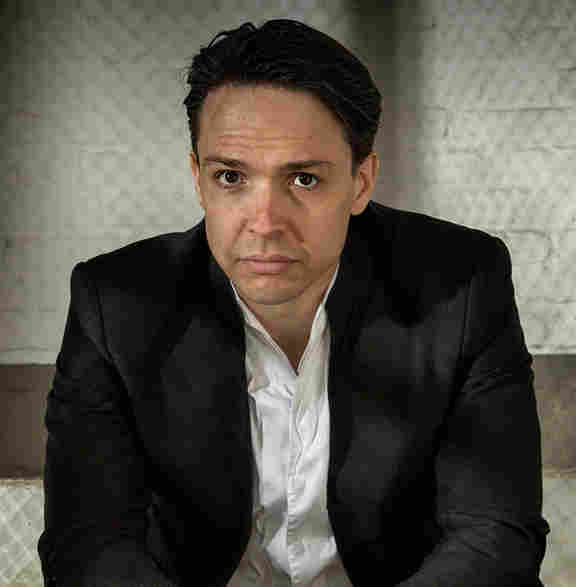
| Evan-Alexis Christ | |||||
| Chorus and Orchestra of the Sofia Opera and Ballet | ||||||
Date/Location
Recording Type
|


Das Rheingold |

Die Walküre |

Siegfried |

Götterdämmerung |


Director Plamen Kartaloff’s Ring Cycle Continues to Inspire for Generations to Come
Director Plamen Kartaloff’s newest production of “Der Ring des Nibelungen” holds a very special place in the opera world. Sofia Opera and Ballet premiered this production in 2023 and OperaWire reviewed its arrival and aesthetic developments in full, detailing how “in a country with a population of less than seven million people, the cycle was cast almost entirely using home-grown talent.” This year’s festival celebrates the continuation of local community support that still resonates and fascinates audiences from all over.
Leading this year’s production of the Ring Cycle is American conductor Evan-Alexis Christ. He marks a musical turning point that highlights Sofia’s sustained distinction among Wagner lovers and historians. Christ has worked with Sofia Opera since 2020, leading productions of Strauss’ “Elektra” and “Ariadne auf Naxos,” and Wagner’s Ring Cycle and “Lohengrin.” His wide range of dynamics, collaborations, and mutual respect among Sofia Opera Orchestra’s musicians ushers his interpretations forward, bringing to the forefront some of the greatest singing performances to date.
Kartaloff’s production, which includes Hans Kudlich’s set design, illuminated by Andrei Hajdinjak’s spectacular lighting design, Elena Shopova’s multimedia and Hristiyana Mihaleva-Zorbalieva‘s costumes, made for another thrilling celebration of the Ring Cycle.
Das Rheingold
Dramatic baritone Thomas Hall as Wotan set the tone for this year’s Ring Cycle, beginning with “Das Rheingold.” He wasted no time honing in on what matters most in every Ring Cycle: the music and singing. His voice was a powerful and clear example of the physicality it takes for a dramatic baritone to sustain their voice effectively throughout an entire Ring. Hall’s demeanor commanded attention and demanded precision from himself in order to deliver the absolute best singing that a Wagnerian baritone can muster. Most notable among his talents, apart from his singing, was his stature within Kartaloff’s production. The timeless, space-like, post apocalyptic realm of this entire Ring Cycle production catapults the singers into the audience’s mind’s eye. There is nowhere to run or hide, especially vocally, and Hall’s Wotan transcended this aesthetic’s ambiguity by means of his own interpretation and in his own world. It seemed his Wotan could not escape the fortress of his own karmic pitfalls and deliverance, simply because he did not aim to. He is a Wotan damned to be in the depths of his own god-making and this is exactly what made his vocal performance lasting and relevant. The direction of his performance’s focus stemmed from the radical examination of his character’s severity and need for power, especially by ‘ruling’ his own family’s destiny by force. His voice while singing ‘Abendlich strahlt der Sonne Auge’ sounded solid and set him apart from his castmates due to his sheer determination. The level of performance he brought to the stage was matched by every cast member.
Baritone Plamen Dimitrov as the Nibelung dwarf Alberich captivated the audience with his sinister demeanor and vocal performance as he plotted to trick the Rheinmaidens and steal the gold. His physicality also served him well as he hustled about the stage in miserly desperation, grasping at the Rheinmaidens and hurling his weight towards them to distract and dismantle their guarding of the gold. He came to life especially as he sang ‘Hieher dorthin hehe hoho!’ The orchestra’s dramatic playing sounded exquisite in this moment too. Christ’s conducting really leaned into the dynamic possibilities with excitement and energy that stirred the audience. The violins were particularly dramatized as they plunged into Wagner’s composition and gave new meaning to Alberich’s radical haste.
The three Rheinmaidens, Stanislava Momekova as Woglinde, Ina Petrova as Wellgunde, and Alexandrina Marinova Stoyanova-Andreeva as Flosshilde, were the perfect combination of magical beauty and mystical existence. Their costumes, designed by Hristiyana Mihaleva-Zorbalieva, were luminous and allowed for them to move and jump about the set’s open concept design. There were trampolines in the center of the large circles that formed the set and the Rheinmaidens had fun flirting and flitting about this layout. They were all three in great physical shape while singing and jumping, maintaining their utmost concentration on their vocal performance. They exemplified solid breath support and vocal agility while adapting to the creative terrain of this production.
Mezzo-soprano Vesela Yaneva as Erda was a highlight of the evening as she sang ‘Weiche Wotan weiche.’ Her voice’s warm vocal palette sounded expansive and grounded at the same time. Mezzo-soprano Niina Keitel as Fricka gave a remarkable performance in her role. Her voice balanced Hall’s baritone and the two complimented one another very well. Both Erda and Fricka’s costumes were brilliantly designed. Mezzo-soprano Silvana Pravcheva as Freia was glorious in her role and her vocal agility was excellent. She looked radiant in her costume like a bright rising sun. Bass Svetozar Rangelov as Donner was warm and majestic in his role. His voice sounded pure and intentional as he sang, clearing the path of the gods and blessing them with their new arrival in Valhalla. His presence was like a beacon of light. His detailed costume really served a beautiful purpose when he was onstage. Every element came to life in this production as the singers moved about and the design was rich with symbolism.
Tenor Daniel Ostretsov as Loge sounded exquisite in this role. He performed as Loge in 2023 as well and OperaWire captured initial impressions of his voice. What made his performance stand out the most this year was his role within the cast. It seemed his voice was a welcome breath of fresh air among the heavier timbres. His interpretation of ‘Umsonst sucht ich’ was a revelation about the core meaning of Wagner’s “Das Rheingold,” and how trading Freia for all the power of the world would be in vain. His voice managed to create a sense of urgency through dire warning of what would come.
Tenor Krassimir Dinev as Mime was a major highlight of the Ring Cycle, especially his performance in “Siegfried.” However, when we first met him in “Das Rheingold,” his voice and presence were just coming to life and this was apparent in Wagner’s score. During his performance of ‘Sorglose Schmiede schufen wir,’ his voice emerged from the pits as he told of how welding gold for greed creates splinters of evil that shimmer and lie hidden in shafts. Wagner’s depth knows no bounds and Mime digs deeper in the crevices that he is familiar with to uncover the hardest truths. Dinev really impressed all of us with his expressivity and focused willpower as he performed Wagner’s score. His vocal inflections and subtle nuances gave character to Mime but never took away from the darkness and destruction of greed’s path unfolding before him. His makeup and costume were perfect and his performance left the audience wanting more from him, especially come “Siegfried.”
The orchestra, especially during ‘Sorglose Schmiede, schufen wir’ worked in tandem with young people onstage inside metallic structures that revealed them toiling for their new master, crafting metal in the fire and heat of a smoldering plant. The stage’s set design in this scene was spectacular and the metal tinkering playing along with the orchestra made a harsh sound that amplified Wagner’s compositional intention, ushering in a new wave of paranoia around the illusory importance of gaining power through gold. Christ made sure this was front and center, maintaining percussive precision and awareness the whole time.
Basses Petar Buchkov as Fafner and Stefan Vladimirov as Fasolt were larger than life both physically and vocally. Their costumes were designed to resemble giants and made them look terrifying in stature and stamina. Buchkov and Vladimirov’s acting skills were outstanding and these two toiling brothers were complete in the aggressive weightiness of their very existence. Audience members watched in awe as they maneuvered as massively and menacingly as possible among the rest of the cast. Their feet stomped in defiance and their inner urges to get what they wanted manifested vocally as they sang in their rich bass timbres.
Tenor Hrisimir Damyanov as Froh sounded less vocally dynamic than the other singers but his voice delivered a beautiful array of colors.
Overall, the opening of Kartaloff’s Ring Cycle made a lasting impression. “Das Rheingold” showcased the remarkable cast and orchestra working with conductor Christ to deliver a most meaningful dedication to Wagner.
Die Walküre
Hall once again stood tall and elicited Wotan’s proclamation of hellfire, come what may, out of the crushing hopelessness he felt towards his very existence and responsibilities. “Die Walküre” showcased some of his most outstanding work. Hall’s vocal performance of ‘Nun zaume den Ross,’ ‘Was keinem in Worten ich kunde,’ and ‘Ein andres ist’s’ were unforgettable moments. However, the game-changing, level-up vocal highlights occurred while he sang ‘Wo ist Brünnhilde,’ ‘War es so schmalich,’ and ‘Leb wohl du kühnes herrliches’ with mezzo-soprano Gergana Rusekova as Brünnhilde. Rusekova’s voice took on another dimension within Wagner’s composition. The vocal stamina of Hall’s voice when paired with Rusekova increased exponentially. It felt like the energy between the two singers developed into a thunderous roar of glorious resonance that took audience members into a deeper realm of feeling within Wagner’s composition.
“Die Walküre” guts the heart of the Ring Cycle based on its libretto and how much Wagner stirs the ‘damnations’ of everyone’s destinies, especially Brünnhilde’s. Hall embodied the score and when the fires washed over Brünnhilde’s body in the center of the stage, the entire audience leaned forward, examining the transmutation in shock and deep reverence.
Tenor Martin Iliev as Siegmund was a welcome addition of both voice and presence in this production. His performance just days before, singing the titular role in Kartaloff’s new production of “Tannhäuser,” merited him worthy praise that continued to resonate during his performance in “Die Walküre.” Iliev’s voice especially as he sang with Sieglinde, ‘Was Herd dies auch sei,’ ‘Friedmund darf ich nicht heissen,’ ‘Dich selige Frau,’ ‘Winterstürme wichen dem,’ and ‘Siegmund heiss ich’ sounded gut-wrenching. Iliev’s ability to empathically portray any of the roles he takes on is unmatched. His performance during Act Two — ‘Kehrte der Vater nun heim!’ with Sieglinde, Hunding, Brünnhilde, and Wotan — is revolutionary. He fights to the bitter end to protect and love Sieglinde, while also serving his own destiny. One might be reminded of Iliev’s final moments in “Tannhäuser,” when he proclaims his will and hands over his final moments to Wagner’s moving score. Both of these moments during Sofia Opera and Ballet’s Wagner Festival 2025 were historic. Iliev’s performances were life-changing.
Soprano Tsvetana Bandalovska as Sieglinde gave the performance of a lifetime, especially in scenes with Iliev. Her voice as Princess Elisabeth in “Tannhäuser” was still lingering in my memory as I watched her perform in “Die Walküre.” Her vocal technique and stamina are fine examples of how a soprano can manage back-to-back and demanding Wagnerian roles. She sounded precise in her vocal phrasing and the orchestra never overpowered her. Bandalovska is also a first-class actor. She managed her vocal agility and resonance perfectly while portraying a deteriorating woman on the run from damnation simply by existing. In the moments where she sang with Siegmund, including ‘Ein Schwert verhiess mir der,’ ‘Du bist der Lenz,’ ‘O susseste Wonne,’ and ‘Raste nun hier,’ her voice blossomed and then left her body as she experienced his soul-crushing death. Bandalovska made audience members forget time and space during her performance. Kartaloff’s production will be marked as a turning point due to her and Iliev’s unforgettable performances. “Die Walküre” will always be about Bandalovska and Iliev, in my mind’s eye.
Bass Bjarni Thor Kristinsson as Hunding gave a bold performance in his role. His voice as he sang ‘Mud am Herd,’ ‘Afgemat bij de haar,’ and especially, ‘Kehrte der Vater nun heim’ far exceeded expectations. Kristinsson’s bass sounded full-bodied and sonorous in his delivery. In Act Two, when he used his blades to murder Siegmund, there was an awed hush that fell over the audience, begging for him to stop his madness and praising his vocal exactness at the same time. Hall as Wotan and Rusekova as Brünnhilde looked on in that moment while Bandalovska collapsed in shock and insurmountable grief. Keitel as Fricka used her voice in defiance of Wotan’s plans and high hopes for Siegmund and Sieglinde. ‘Der alte Sturm’ and ‘Nichts lerntest du’ was rich with torment as she sang.
Die Walküre for this performance included Stanislava Momekova as Helmwige, Silvia Teneva as Ortlinde, Liliya Kehayova as Gerhilde, Ina Petrova as Waltraute, Elena Mehandzhiyska as Siegrune, Tsveta Sarambelieva as Rossweisse, Alexandrina Stoyanova-Andreeva as Grimgerde, and Vesela Yaneva as Schwertleite. The women were magnificent in their performances! When they entered the stage along with their trusty stage guides and mounted upon brilliant red horses, the whole audience clapped and showed their excitement.
Kartaloff’s production of “Die Walküre” continues to be one of the most impactful in its design, execution, and devotion in its delivery of Wagner’s libretto and score. This performance is worthy of documentation and highlighting for its efforts in stage direction. Every moment seemed to flow naturally and despite the oversized set props that were maneuvered all at once, everything and everyone came together perfectly. I would absolutely see this again, for the thrill of the Valkyries’ entrance alone! Brava!
“Siegfried”
Danish Jugendlicher Heldentenor Magnus Vigilius in the titular role was the gemstone of this year’s “Siegfried.” His radiant voice was full of life, exuding the naiveté, reckless abandon, and passionate determination of Siegfried. He embodied a true sense of fearless invincibility in his spirit and this made him both captivating and breathtaking. His physical stature was handsome and radiant in the soft streaming spotlight that followed his movements and expressions. I lost track of keeping time during his performance because I was absolutely enthralled with how energetically he navigated the stage’s minimal yet complex set design, manoeuvring effortlessly among the raised platforms of the two center ring designs. Vigilius made Kartaloff’s production a real life art installation of highest form and matter. His costumes depicted silver feathers that turned to red and glowed with his burning desire to defeat his oppressors. He rose above the circumstances he was dealt and invited the audience to go along with him on his journey: a hero in the making by means of hell-bending efforts and gut-burning gumption. There seemed to be nothing Vigilius’ Siegfried could not do well.
Vigilius’ vocal quality is one-of-a-kind, in addition to his personality and embodiment of the character. Even when he smiled he became a light beaming on a stage full of darkness and desperation. Witnessing him live and in action was a special moment: an absolute triumph in every way possible. His voice during ‘Nothung nothung neidliches’ as he was crafting and proclaiming his sword was stunning. The orchestra’s glorious sound rolled over the pit and spilled into the audience. It felt like Wagner himself was in the room, witnessing history being made with all the precise elements he had envisioned for this moment. Vigilius gave a superb performance and this was an unforgettable moment for Sofia Opera and Ballet’s Wagner Festival 2025.
Dinev continued to lead the way as Mime, giving yet another notable performance. His interactions with the different version of Siegfried running across the stage — as an infant, then a youth, then a young man — were hilarious, the stage direction having him chasing Siegfried about and trying to ‘discipline his difficult child.’ Wagner’s libretto avoids overshooting Mime’s aggressive and manipulative behaviors so that the composition can freely flow and further develop the ‘hero’s journey.’ Dinev therefore used this to the best of his abilities, playing up the ridiculousness of himself as a Nibelung dwarf fostering a Wälsung. His voice while singing ‘Als zullendes Kind’ was particularly bold and bright. Dinev’s performances are like observing a masterclass in both singing and acting. His physical activeness and demeanor brought a unique energy of intention to his vocal quality every time he was on stage. In short, Dinev has ‘star quality.’
Hungarian bass-baritone Krisztián Cser as the Wanderer was a vocally balanced choice for this role. His voice during ‘Du bist nicht’ resonated in Sofia Opera’s hall in abundant delight and wonder. He looked the part onstage with his costume and bouncy globe and staff in hand. Cser’s portrayal of the Wanderer made it easy to remember why Wagner included this character: to illuminate the evolution of order and curiosity of man. The Wanderer is not alone in his journey and actions. He is ultimately a soothsayer and forges the right of natural order to prevail so that Wotan’s force can longer be sustained. Cser’s calm and serene demeanor even when teasing Mime made him very effective as an actor and this is vital to any “Siegfried” production. The veil of illusion cast over the audience through Wagner’s genius stayed intact and Cser is a good example of how this happened: excellent singing paired with drama through means of Wagner’s complex composition amounting to gesamtkunstwerk.
Soprano Radostina Nikolaeva as Brünnhilde was destined to rise to the same standard set by Vigilius’ Siegfried, as Nikolaeva became his fateful partner and one true love in this production. When she was awakened by Siegfried, Nikolaeva’s voice sounded innocent yet wise. Her hesitations of being touched by Siegfried were honorable in that she had been waiting for so long and placed there by Wotan as her only known destiny. Brünnhilde’s warmth took time to develop and Nikolaeva’s voice expressed this as well. She sounded enlightened as she sang ‘Ewig war ich,’ (I was eternal, I am eternal, eternal in sweet, longing bliss, yet eternal for your salvation!). Her voice awakened into her conscious heart’s pure love’s bliss and strength to endure the unknown. Nikolaeva and Vigilius were a charming duo in this production.
Yaneva as Erda was a magical moment to behold. She looked like art rising up from the depths as she shone onstage in her costume. Her voice continued to deliver excellent technique and support. Buchkov as Fafner was still another highlight of Sofia’s Ring Cycle. I look forward to hearing more of him next year as well. Maria Pavlova as the Woodbird floated and fluttered on bungee cables above the stage while wearing a very detailed costume. Her voice was pure and clarion as she managed to sing from her suspended position and in the face of the physical demands. Petrova and Kiril Ivanov as the Visions did fine work in their portrayals throughout the production. The multimedia work by Shopova really made a difference in this opera compared to the first two. Her choice of colors and ethereal movement above the stage added and elevated every aspect of this Ring Cycle.
Kartaloff’s Sofia Opera and Ballet Ring Cycle was a tremendous success this year and one that will continue to inspire Wagner devotees and new listeners alike for generations to come.
Jennifer Pyron | Jul 12, 2025
Plamen Kartaloff a transformé la tétralogie wagnérienne en une fresque visuelle et philosophique unifiée par le symbole du triskèle (cercles géocentriques). Ce motif, représentant la « spirale de la vie », structure chaque opéra tout en créant une continuité scénographique. Dans Das Rheingold les triskèles immergés dans une piscine centrale, éclairés en bleu électrique, forment un vortex liquide. Les Filles du Rhin (Woglinde, Wellgunde, Flosshilde) nagent littéralement dans cet espace, utilisant des trampolines pour simuler des mouvements de vagues. Des projections de reflets aquatiques envahissent le fond de scène, créant une illusion de profondeur abyssale. Pour l’antre d’Alberich, les triskèles se disloquent en structures métalliques anguleuses. Des jeux de lumières stroboscopiques (Andrej Hajdinjak) et des fumées denses évoquent la forge infernale, tandis que les enclumes (18 en tout !) résonnent depuis les coulisses, conformément à la partition de Wagner. La transition du fluide au métallique illustre la perversion de la nature par la cupidité. La chute d’Alberich dans le Rhin, où il est encerclé par des projections de vagues dévorantes, souligne la circularité du destin — un thème central du Ring.
Dans Die Walküre la hutte de Hunding est un triskèle brisé, recouvert de neige artificielle, forme un cercle de pierres ancestral. Des ombres projetées (représentant le frêne sacré) envahissent le sol lors de la scène de reconnaissance entre Siegmund et Sieglinde, liant leur destin à la mythologie nordique. Pour la célèbre “Chevauchée des Walkyries”, les huit guerrières émergent d’un brouillard rougeoyant, juchées sur des plateformes suspendues évoquant des rochers célestes. Leurs capes pourpres flottent sous des ventilateurs cachés, créant un effet de vol stylisé. Des projections de runes scandinaves défilent sur le cyclorama durant leur cri de guerre. La scène finale de Wotan entourant Brünnhilde d’un anneau de feu utilise des flammes virtuelles projetées sur un écran de fumée. Les triskèles s’embrasent en synchronie avec l’orchestre, fusionnant le leitmotiv du feu (Loge) et de la malédiction — une métaphore de l’implosion des Dieux.
Dans Siegfried, la forêt au centre du livret devient organisme vivant. Des triskèles recouverts de mousse et de lianes forment des dômes végétaux. Des projections d’arbres en croissance accélérée répondent aux cuivres de l’orchestre, tandis que l’Oiseau (soprano suspendue à un trapèze) survole la scène dans une cage lumineuse en forme de sphère. Pour représenter Fafner en dragon, plutôt qu’un costume réaliste, Kartaloff opte pour une abstraction : des lasers verts dessinent les contours du dragon, pilotés depuis la fosse par des techniciens. La « peau » de Fafner est un écran translucide où défilent des algorithmes évoquant sa mutation monstrueuse. Quant à la forge de Siegfried, elle intègre des étincelles réelles (système pyrotechnique à froid) et des sons d’enclume spatialisés. Quand l’épée brisée est reforgée, les triskèles pivotent pour former une étoile, symbolisant la renaissance héroïque.
Pour Götterdämmerung, un triskèle doré géant forme le palais des Gibichungen. Des colonnes de lumière blanche (évoquant le pouvoir stérile de Gunther) croisent des ombres noires (Hagen), tandis que des miroirs brisés reflètent la duplicité des personnages. Dans la fameuse scène d’Immolation finale, Brünnhilde chante son monologue sur un cheval stylisé en métal rouillé. Le bûcher s’embrase via des projections de flammes dansantes, tandis que des paillettes argentées (l’or du Rhin restitué !) tombent du ciel. Le Valhalla brûle en hologramme, remplacé par une aurore boréale verte, l’Espoir selon Kartaloff. Les filles du Rhin récupèrent alors l’anneau dans un bassin vide, soulignant le retour à l’équilibre naturel. Le triskèle central se désagrège lentement en poussière lumineuse, clôturant le cycle de la démesure par une purification visuelle… C’est tout simplement superbe à voir !
Comme toujours, l’Opéra de Sofia peut interpréter la plupart des rôles avec sa propre troupe. Mais on a également assisté à d’excellentes performances de certains invités. La Bulgare Iordanka Derilova a été tout simplement superbe, tant par son soprano au dramatisme intense que par son interprétation talentueuse de l’une des meilleures Brünnhilde du moment (dans Le Crépuscule des Dieux), tandis que a compatriote Radostina Nikolaeva n’a pas moins démérite (dans le même rôle) dans La Walkyrie, avec une voix tranchante et acérée dans l’aigu, mais sachant s’adoucir et s’humaniser dans les suppliques adressées à son père dans le finale. Le Britannique Thomas Hall a brillé en Wotan dans L’Or du Rhin et La Walkyrie, tout comme le Hongrois Krisztián Cser qui reprenait le rôle dans Siegfried. Le danois Magnus Vigilius a incarné un Siegfried éclatant de santé et avec un charisme rayonnant (dans Siegfried) tandis que Kostadin Andreev a lourdement déçu dans la reprise du rôle dans Le Crépuscule, avec une voix fatiguée et de piètres qualités d’acteur. La basse bulgare Petar Buchkov en Fafner (puis Hagen), l’Alberich de Plamen Dimitrov, et l’Erda de Vesela Yaneva ont également fait grande impression, parmi la multitude de leurs confrères et consoeurs dont aucun.e. n’a démérité (hors le cas déjà cité).
Sous la baguette dynamique du chef greco-américain Evan-Alexis Christ – déjà à la tête de l’orchestre de l’Opéra de Sofia dans une Elektra vue un mois plus tôt à l’Opéra d’Istanbul -, la phalange “maison” a livré une performance puissante et nuancée : les leitmotivs (destin, épée, or) ont notamment été articulés avec une clarté remarquable, notamment dans la « Marche funèbre » de Götterdämmerung. Christ a utilisé ici une version orchestrale adaptée aux théâtres de taille moyenne, sans sacrifier la grandeur wagnérienne. Une quadruple production qui consolide Sofia comme le Bayreuth des Balkans !
Emmanuel Andrieu | 6 juillet 2025
Imponiéndose a fuerza de talento, esfuerzo y calidad como “la Bayreuth de los Balcanes”, la compañía de Ópera de Sofia volvió a presentar con rutilante éxito su fascinante producción del Anillo de los Nibelungos, firmada por el talentoso Plamen Kartaloff y estrenada en la compañía en el 2023, dentro de la programación de la nueva edición 2025 de su Festival Wagner.
En lo que a la propuesta vocal respecta, el reparto compuesto casi en su totalidad por voces locales confirmó el excepcional momento que atraviesa la lírica búlgara actual e hizo justicia con la ópera y la puesta. De las voces femeninas, hicieron excepcionales prestaciones las tres Brunildas convocadas para la ocasión. Genuina interprete wagneriana, la soprano dramática Iordanka Derilova (Der Götterdämerung), una de las grandes triunfadoras del ciclo, exhibió una voz caudalosa, extensa y con una insultante facilidad para alcanzar las notas agudas más extremas y cuyo vigoroso temperamento, empuje y carácter dramático redondearon una caracterización magnifica por donde se lo buscó. Su “Stake Scheite” no se borrará fácilmente de la memoria del público.
Asimismo, gran relieve dio a la parte, Gergana Rusekova (Die Walküre) quien, con una voz opulenta, de bellísimo esmalte, perfecta emisión y un canto lleno de heroísmo, intensidad y emoción obligó a ir en busca de pañuelos en la despedida que la desobediente hija propinó a su padre antes de quedar dormida en el círculo de fuego. Con una cuidada voz de lirico-spinto la oficiosa Radostina Nikolaeva (en Siegfried) cinceló de sentimientos encontrados su descubrimiento de Sigfrido al despertar en un “Heil dir, Sonne!” de antología que fue directo al corazón. Exultante de vocalidad, otra de las triunfadoras de la noche, fue Tsvetana Bandolovska, quien primero como la velsunga Sieglinde y luego como la Gibichunga Gutrune, exhibió sus extraordinarias facultades vocales, su notable seguridad técnica y su gran ductilidad interpretativa.
Vesela Yaneva delineó con una voz robusta e insinuantes medios expresivos una diosa Erda de primer orden y Alexandrina Stoyanova-Andreeva una Waltraute vocalmente bien equipada y generosa de recursos expresivos que sacó buen partido de su breve escena “Höre mit Sinn was ich dir sage”. Por su parte, Silvana Pravcheva aportó corrección y calidez en su muy convincente composición de la temerosa diosa Freia. En el equipo de voces masculinas, Martin Iliev fue un muy idóneo velsungo Siegmund de gran poderío y potencia vocal. Su “Winterstürme…” cantado con un lirismo a flor de piel le sirvió no sólo para conquistar a Sieglinde sino también a buena parte del público. El heroísmo con el que modeló su canto en su llamado a la espada fue otro de los grandes momentos que este formidable interprete le obsequió a la representación. Una autentica “institución” en la casa, el veterano Kostadin Andreev puso al servicio de la parte de Sigfrido (Der Götterdämerung) sus mejores intenciones, pero su rendimiento fue apenas discreto, cumpliendo con lo justo y necesario.
Todo un acierto resultó Daniel Ostretsov quien, con una voz homogénea, bien timbrada y firme, y echando mano a una inagotable batería de nobles recursos expresivos, brindó una caracterización de alto vuelo del manipulador e insidioso semidios Loge. Completando el apartado de dioses dieron buena y segura réplica, el Donner de Svetozar Rangelov y el Froh de Hrisimir Damyanov. Muy efectivos los nibelungos de Krassimir Dinev y Plamen Dimitrov quienes con buenas cualidades vocales e inacabables recursos histriónicos delinearon muy logradas personificaciones de las complejas personalidades del codicioso y miedoso Mime y de su hermano, el astuto y vengativo Alberico respectivamente. En cuanto al dúo de gigantes constructores, Stefan Vladimirov fue un contundente Fasolt y si bien, Petar Buchkov hizo un desempeño muy loable como Fafner, fue posteriormente, en la más atractiva parte de Hagen donde encontraría un terreno más propicio donde sacar mejor provecho de sus relevante vocalidad y de su vehemente temperamento. Buen rendimiento vocal demostró Atanas Mladenov a cargo del antipático personaje de Gunther, el rey de los Gibichungos.
Con desbordante energía y un envidiable estado físico, Maria Pavlova presumió de su bonita voz hizo colgada de un trapecio y haciendo acrobacias mientras interpretaba al pájaro del bosque. Tanto las ondinas del Rin, como las aguerridas valquirias y las tejedoras Normas fueron caracterizadas con profesionalismo y entrega por talentosos elementos locales. De los cantantes invitados, quien descolló y dejó ganas de más, fue el danés Magnus Vigilius, excepcional Siegfried de la segunda jornada de este anillo, quien exultante de heroísmo, juventud e ingenuidad, y con un timbre luminoso, unos agudos de acero y un fraseo soñado noqueó a la audiencia con un “Nothung! Nothung! Neidliches Schwert!” no apto para cardiacos, y sólo que seria el preludio de una interpretación que siempre iría de más en mejor. Se extraño su presencia en el Der Götterdämerung. Con la dosis justa de autoridad, humanidad y vulnerabilidad, el barítono estadounidense Thomas Hall acreditó un perfecto dominio de la parte del dios Wotan a la que presentó con una voz de bello color, extensa, rica en armónicos y bien proyectada. Todo un lujo resultó el Caminante del húngaro Krisztian Cser quien defendió con una imponente vocalidad un rol que le calzó como anillo al dedo y al que le dio una dimensión superior a la habitual. Remarcable desempeño del islandés Bjarni Thor Kristinsson quien campeó un malévolo Hunding de descomunal hechura vocal. Completando el grupo de cantantes extranjeros, la finlandesa Niina Keitel brindó una tediosa y autoritaria caracterización de la diosa Fricka muy efectiva tanto por vocalidad como por presencia escénica. Una vez más, el coro de la casa volvió a hacer gala de su estupenda forma bajo la vigilante mirada de su directora Violeta Dimitrova. Al frente de una orquesta en auténtico “estado de gracia”, siempre comprometida y atenta a la más mínima indicación de su director, el greco-americano Evan-Alexis Christ emergió como otro de los grandes protagonistas de este ciclo extrayendo lo mejor de sus músicos, elevando el nivel de la general orquesta y ofreciendo una lectura perfectamente controlada, plena de matices y destellos brillantes, de gran profundidad musical y fuerza narrativa. Crítica: «Der Ring Ópera Sofia
La imaginativa, fantástica y atemporal producción escénica firmada por el Prof. Plamen Kartaloff ofreció al espectador una enriquecedora experiencia teatral de enorme belleza visual donde todo estuvo minuciosamente servido con gran respeto al espíritu de la obra wagneriana. La escenografía diseñada por Hans Kudlich estuvo dominada por tres trisqueles (antiguo símbolo geométrico nórdico) que, simbolizando la circularidad de la vida, desde el nacimiento a la muerte, funcionaron como elementos unificadores de las cuatro operas. El movimiento de estos trisqueles, además de ir revelando nuevas y variadas posibilidades escenográficas, dieron continuidad y permitieron un dinámico e interesante desarrollo de la acción, a lo contribuyó en gran medida el ingenioso tratamiento lumínico de Andrej Hajdinjak quien transformó con gran sapiencia estos elementos, cuando no en el fondo del rio Rin, en cuevas subterráneas, en un bosque o en un rocoso circulo de fuego, etc.… No debe pasarse por alto el excepcional aporte de calidad de Hristiyana Mihaleva-Zorbalieva en el diseño del rico y sofisticado vestuario, así como el de Elena Shopova a cargo de los esmerados efectos multimedia que vistieron la escena. El ascenso de los dioses al Walhalla, la famosa cabalgata de las valquirias montadas en impactantes caballos rojos o la inmolación de Brunilda, fueron sólo algunos de los momentos de mayor impacto visual que la audiencia celebró con gran entusiasmo. Una vez caído el telón, grandes ovaciones e interminables aclamaciones para los cantantes, los músicos y los responsables de la producción escénica pusieron un broche de oro a esta nueva reposición del Anillo que consolida el lugar privilegiado que ocupa este repertorio en la Opera de Sofia y que convierte a su Festival Wagner en una cita ineludible para todos los amantes de la música wagneriana.
Daniel Lara | 14 julio 2025

 (5/10)
 |
A production by Plamen Kartaloff (2023)
Also available as video recording