
Siegfried
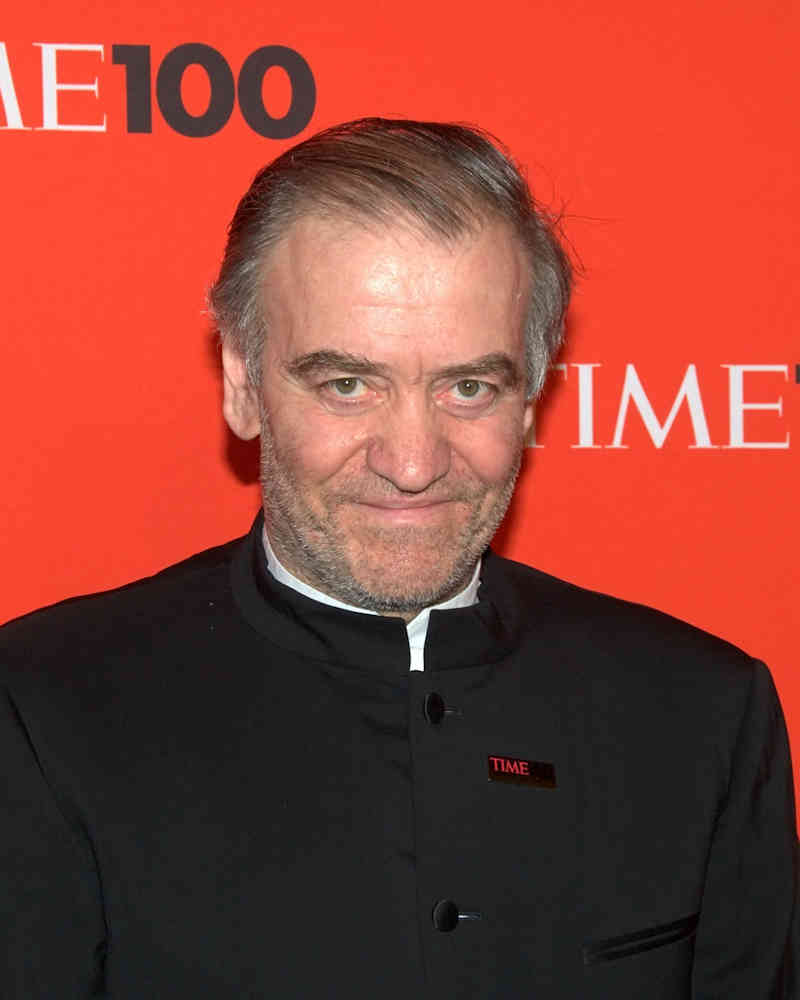
| Valery Gergiev | |||||
| Mariinsky Theatre Symphony Orchestra | ||||||
Date/Location
Recording Type
|

| Siegfried | Leonid Zakhoshayev |
| Mime | Vasily Gorshkov |
| Wotan | Vadim Kravets |
| Alberich | Edem Yakubovich Umerov | Fafner | Mikhail Petrenko |
| Erda | Olga Savova |
| Brünnhilde | Olga Mikhailovna Sergeyeva |
| Waldvogel | Anastasia Belyayeva |


The most immediate – and, I suspect, the most enduring – impression which I carried away from the Mariinsky was of the quite remarkable quality of the orchestral playing and of Valery Gergiev’s conducting. Whether in the depths of the subterranean music of the Nibelungs, in the ravishing beauty of the nature music or in some spectacular climaxes, the playing had subtlety, power, precision, and fluidity. Every section of the orchestra distinguished itself at one point or another. This was orchestral playing of the very highest order, in grace and flexibility a million miles from the stiffness that has sometimes served as Wagnerian orchestral playing. The orchestral Prelude to Scene II will long stay in the mind, as fine a performance as I have ever heard, live or on record.
For the most part the singing was of an order one might call highly competent, without ever quite achieving the kind of absoluteness that lies beyond even the highest competence. Amongst the women, Olga Savova’s Erda confirmed the very favourable impression made by her Brünnhilde in Die Walküre; Olga Sergeyeva’s rich soprano brought a commanding vocal energy to the role of Brünnhilde here, though there were moments of wildness too. Anastasia Belyaeva was a charmingly lyrical woodbird. Amongst the men, Vasily Gorshkov’s large tenor voice produced some very effective moments as Mime and Mikhail Petrenko’s bass brought a wonderful and characteristically Russian radiance to Fafner. Edem Umerov was in fine powerful, voice as Alberich. Leonid Zakhozhaev, young and virile, broad shouldered and agile, certainly looked the part of Siegfried and, more or less, sounded it too. His tenor largely survived the demands of the role, though with some signs of tiredness towards the end and occasional uncertainties of pitch; still, adjectives like decent and competent were the ones that came most readily to mind. Vadim Kravets was inconsistent as The Wanderer, beginning somewhat tentatively when in dialogue with Mime, but coming into his own rather more in his exchange with Alberich.
The weaknesses of staging evident in Die Walküre were yet more apparent here. Characters interacted too infrequently; no doubt it wasn’t really the case, but there were times when it appeared as though the soloists had simply been left free to stand and deliver and there were moments when the demeanour of some of them seemed more appropriate to the concert platform than to the opera stage. The level of acting was not, on the whole, very high and at times was distinctly wooden and drawing an old-fashioned repertoire of gesture. Vadim Kravets’ Wanderer/Wotan had neither the gravitas nor the vulnerability to be fully convincing; the notes were sung, mostly pretty decently, but he didn’t do much to invest the character with a great deal of life. (It didn’t help that he fiddled repeatedly with his eye patch!). In terms of stage presence, Mime never really got beyond the level of cliché.
There was much that was very static and attempts to enliven the action by the involvement of a troupe of dancers were generally rather intrusive and inadequately integrated, tending to prettify and sentimentalise. Their movements sat very oddly with the very different world view embodied in George Tsypin’s monumental stage set; not for the first time in this Ring Cycle, there was a kind of disjunctiveness amongst the elements of which it was composed, as if there was no overall singleness of vision applied with full concentration to the task of unification of purpose in word and action, music and set. The “Production Concept” is credited to Gergiev and Tsypin, but one wonders just how much sustained attention either of them was able to give to the details of staging, to the integration of all the many elements into a coherent articulation of their ‘concept’.
The overall effect was to make of Siegfried a Slavic Romance rather than a Teutonic epic. The absence of much that was explicitly Teutonic was a loss that was untroubling. More disturbing was the inconsistent presence of true epic scale. After the distinct promise, and the considerable degree of actual achievement in Die Walküre, this Siegfried came as at least a mild disappointment. I was glad to have seen it – and gladder still to have heard it – but left feeling that an opportunity had been missed, that something truly remarkable could have been achieved with tighter and more creative directorial attention.
Glyn Pursglove | Wales Millennium Centre 02.12.2006

 (5/10)
 |
Production concept: Valery Gergiev and George Tsypin
This recording is part of a complete Ring cycle.